Build Tests
Code Quality
Release Discipline
Release history audited up to v2.0.0
Tested on Magento 2.4.9
Recent Test History
Each release is tested against the latest Magento version at that time.
Top Contributors
View Leaderboard

Share This Module's Status
README
Loaded from GitHubMagento 2 Catalog Generator Module
This is a Magento 2 module for generating catalogs efficiently based on YAML configuration files. It supports the creation of categories, products, customer groups, websites, and more, directly using SQL queries for improved performance.
Installation
-
Install the module using
composercomposer require qoliber/m2-catalog-generator -
Run the following commands to enable the module and clear cache:
php bin/magento module:enable Qoliber_CatalogGenerator
php bin/magento setup:upgrade
php bin/magento cache:flush
How to use:
Command Usage
To generate a catalog, use the following console command:
php bin/magento qoliber:catalog:generate [file.yml]
Important information
Entire product catalog and related tables are completely wiped out of all testing / live data.
**You can view CleanUp class in Sql directory
Replace [file.yml] with the path to your YAML configuration file.
Sample configurations can be found in the _samples directory (small.yml, medium.yml, and large.yml).
Example:
php bin/magento qoliber:catalog:generate vendor/qoliber/m2-catalog-generator/_samples/small.yml
Module Features
- Flexible Configuration: Define catalogs using YAML configuration files.
- Optimized Performance: Leverages direct SQL queries for faster data population.
- Modular Architecture: Easily extendable and well-organized codebase.
- Customizable Entities:
- Products (Simple, Configurable, Bundle, Grouped)
- Categories
- Websites
- Store Views
- Attribute Handling: Populates and combines configurable attributes efficiently.
- Attribute Handling: Populates and combines configurable attributes efficiently.
- Creating randomized product images
- Product
Module Structure
Below is an overview of the module’s directory structure:
Key Components
- Api: Defines interfaces for extensibility and loose coupling.
- Config: Handles configuration parsing and validation.
- Console: Contains
CLIcommands to trigger catalog generation. - Data: Implements data generation and population logic.
- Generators: Logic for creating entities (e.g. products, categories).
- Populators: Populates entity attributes.
- Reader: Reads
YAMLconfiguration files. - Resolver: Resolves entity names and dependencies.
- Service: Orchestrates catalog generation and cleanup.
- Sql: Handles raw
SQLoperations for optimal performance. - Task: Executes specific tasks like assigning products to categories and generating URLs.
Sample YAML Files
Example YAML files are available in the _samples directory:
small.yml: Minimal configuration for quick testing.medium.yml: Moderate configuration for medium-sized catalogs.large.yml: Comprehensive configuration for large catalogs.
Developer Notes
-
Dependency Injection: The module follows Magento’s DI pattern for better flexibility -
Testing: Unit tests are available underTest/Unit. -
Code is passing
phpstan-8andphpcs magento-coding-standards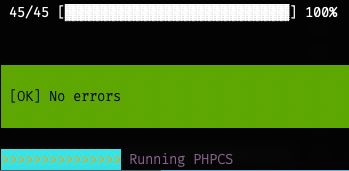
Example Classes:
- Generators: Found in Data/Generators, these create catalog entities.
- Populators: Found in Data/Populators, these populate attributes for entities.
- Tasks: Found in Task, these handle specific catalog operations.
License
This module is open-source and distributed under the MIT License.
For further questions or contributions, feel free to contact us or submit a pull request!
This content is fetched directly from the module's GitHub repository. We are not the authors of this content and take no responsibility for its accuracy, completeness, or any consequences arising from its use.